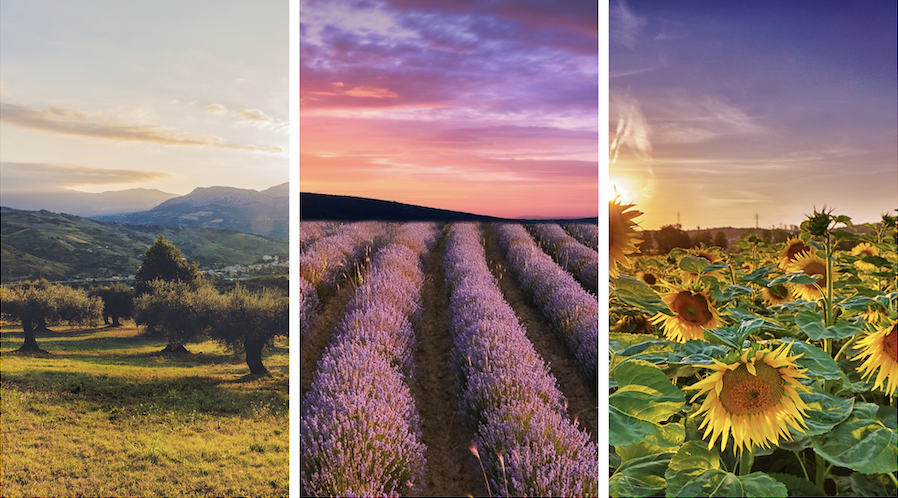
No other plant enjoys such universal fame. The olive branch has become an emblem for the United Nations and the Olympics; the olive tree was an inspiration for painters like Van Gogh, Braque, and Cezanne; and the olive itself is the centerpiece of the healthy Mediterranean diet.
The cultivation of the wild olive tree started more than 5,000 years ago. Back then, humanity had already noticed that the green or black fruits of the olive tree were particularaly nutritious. As cultivation techniques gradually improved, olives became one of the three fundamental nutriments across the Mediterranean. (Wheat and wine were the other two.) Though the olive tree was primarily cultivated to make olive oil for consumption, the Greeks and Romans also discovered its ability to soften skin, warm muscles, prevent dermatosis, and treat burns. They also developed perfumes by combining olive products with flower petals. That means olives have been used as skin care ingredients since 500 BC!
Grown in a unique climate with special cultivation routines, Nyons’s olives are famous for their extremely high nutritional value.
The scents of south France are too complex and evocative to capture in a sentence. There is one distinctive aroma that is often hailed as the signature. Called garrigue, it comes from the bushy, fragrant plants found growing wild on the limestone hills of the Mediterranean coast. This vegetation provides the foundation for the Côte d’Azur’s unique fragrance. It is a heady mix of juniper, thyme, sage and lavender, with the name garrigue used to refer to them collectively.
Nyons is known as “Petit Nice” because of its sunny climate and its limpid, dry air, both of which are on par with those of the nearby Côte d'Azur or French Riviera, where Nice is located. In the beauty industry, two hours of sun exposure at noon in the French Riviera is the standard irradiation used for sunscreen efficacy tests.
Sunlight is essential for photosynthesis and is therefore the source of almost all life on Earth. However, excessive sun irradiation causes permanent damage to everything that is exposed. Plants in Nyons had to adapt to the region's high intensity of sunlight in order to prosper.
All of these attributes have significantly inspired our approach to product and technology development.